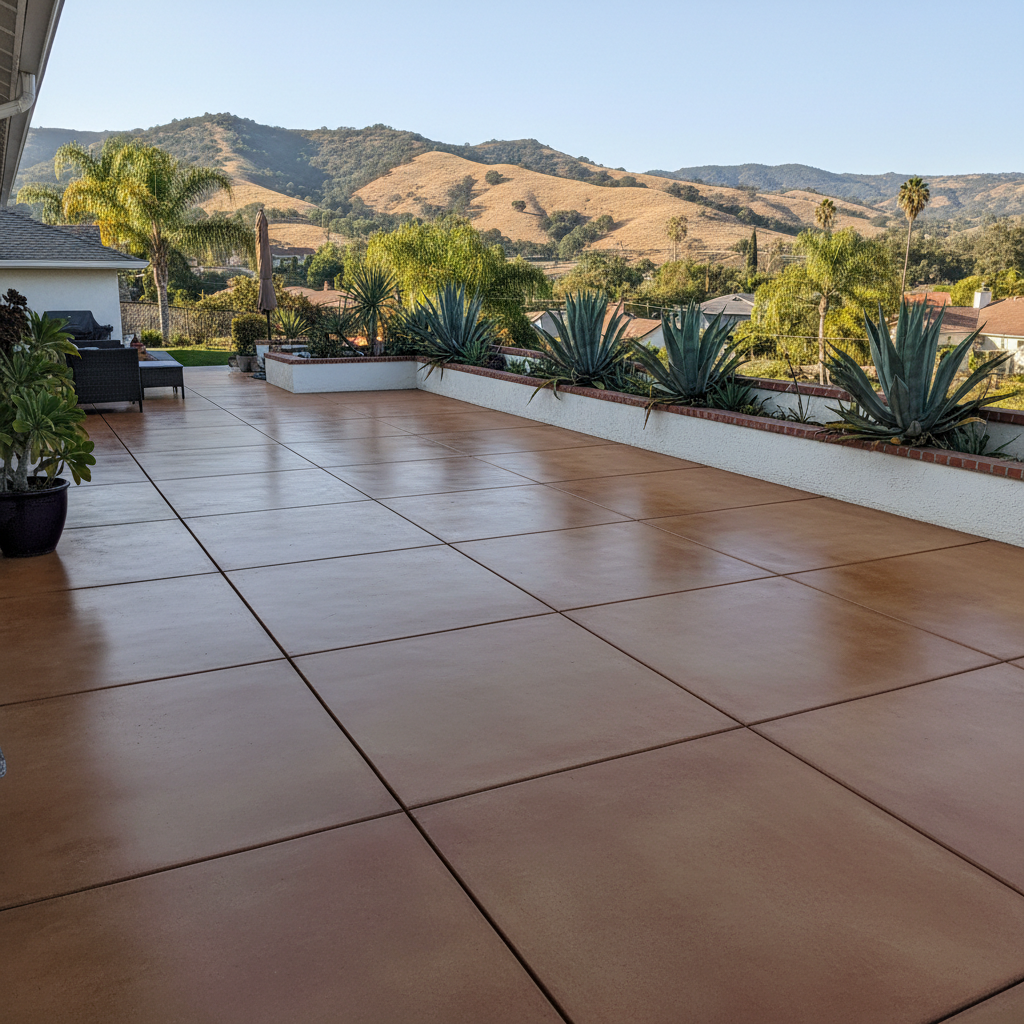
You've got stained concrete, right? Maybe it's your patio, a walkway, or even your interior floors. It looks fantastic, I know. But just like anything else you put money into, it needs a little love to stay that way. Especially here in Ventura, where our coastal climate and sunshine can be tough on surfaces.
Extending the Life of Your Stained Concrete
The biggest thing you can do to make your stained concrete last is to protect its sealer. The stain itself is pretty durable, as it penetrates the concrete, but the sealer is what takes the beating from foot traffic, furniture, and the elements. Think of it like the clear coat on your car.
First off, be gentle. Don't drag heavy furniture across it without felt pads. If you've got planters, put them on stands or use saucers to prevent water from pooling underneath. Water sitting on a sealed surface for extended periods is a bad idea, especially with our occasional heavy rains that can sit for days, like we saw this past winter.
Another big one is avoiding harsh chemicals. Bleach, strong degreasers, or anything abrasive will strip that sealer faster than you can say "Paradise Concrete Co." Stick to mild, pH-neutral cleaners. If you're not sure, plain water and a soft brush are usually your best bet.
For exterior stained concrete, especially around areas like the Pierpont neighborhood where you get a lot of salt air, consider reapplying a fresh coat of sealer every 2-3 years. If it's a high-traffic area, like a commercial space, you might need to do it annually. Interior floors in a busy household might need it every 3-5 years. It's not a huge job, and it makes a world of difference.
Regular Maintenance: What You Should Be Doing
This isn't rocket science, folks. It's mostly common sense.
- Sweep or blow regularly: Get rid of dirt, sand, and debris. These act like sandpaper underfoot, slowly wearing down your sealer.
- Mop with mild soap: For interior floors, a damp mop with a pH-neutral cleaner is perfect. Don't use too much water; you just want to clean, not soak.
- Hose down exterior surfaces: For patios and walkways, a good rinse with a garden hose can get rid of most surface grime. For tougher spots, a soft-bristle brush can help.
- Clean spills immediately: Especially things like oil, wine, or anything acidic. The longer they sit, the more likely they are to etch or stain the sealer, or even the concrete underneath if the sealer is compromised.
That's really it for the day-to-day stuff. Simple, right?
Warning Signs You've Got a Problem
Your concrete will tell you when it's not happy. You just need to know what to look for.
- Dullness or fading: If your vibrant stain is starting to look lackluster, it's usually a sign the sealer is wearing thin and the UV rays are starting to get to the stain itself.
- Scratches or scuffs: These are direct indicators that your sealer isn't protecting like it should.
- Water absorption: This is a big one. If you spill water and it soaks into the concrete, darkening the surface, your sealer is definitely gone. A properly sealed surface will bead water up.
- Peeling or flaking: This means the sealer wasn't applied correctly, or it's been exposed to something really harsh. This is more serious and usually requires professional attention.
- Cracks: While not directly related to the stain or sealer, new cracks can compromise the integrity of the surface and allow moisture in, which can affect the stain over time.
When to Call a Professional
Look, I'm all for DIY, but some things are best left to the pros. If you're seeing any of those more serious warning signs – widespread peeling, significant fading, or new cracks – it's time to give us a call. Trying to fix a failing sealer yourself can sometimes make things worse, creating an uneven finish or trapping moisture.
Also, if you're thinking about re-sealing a large area and you're not comfortable with the process, or if you want to change the look entirely, that's what Paradise Concrete Co. is here for. We've got the right equipment, the right products, and the experience to get it done right the first time. We know what works best for our Ventura weather, from the hot Santa Anas to the misty mornings. Don't let your beautiful stained concrete go to waste; a little proactive care goes a long way.